

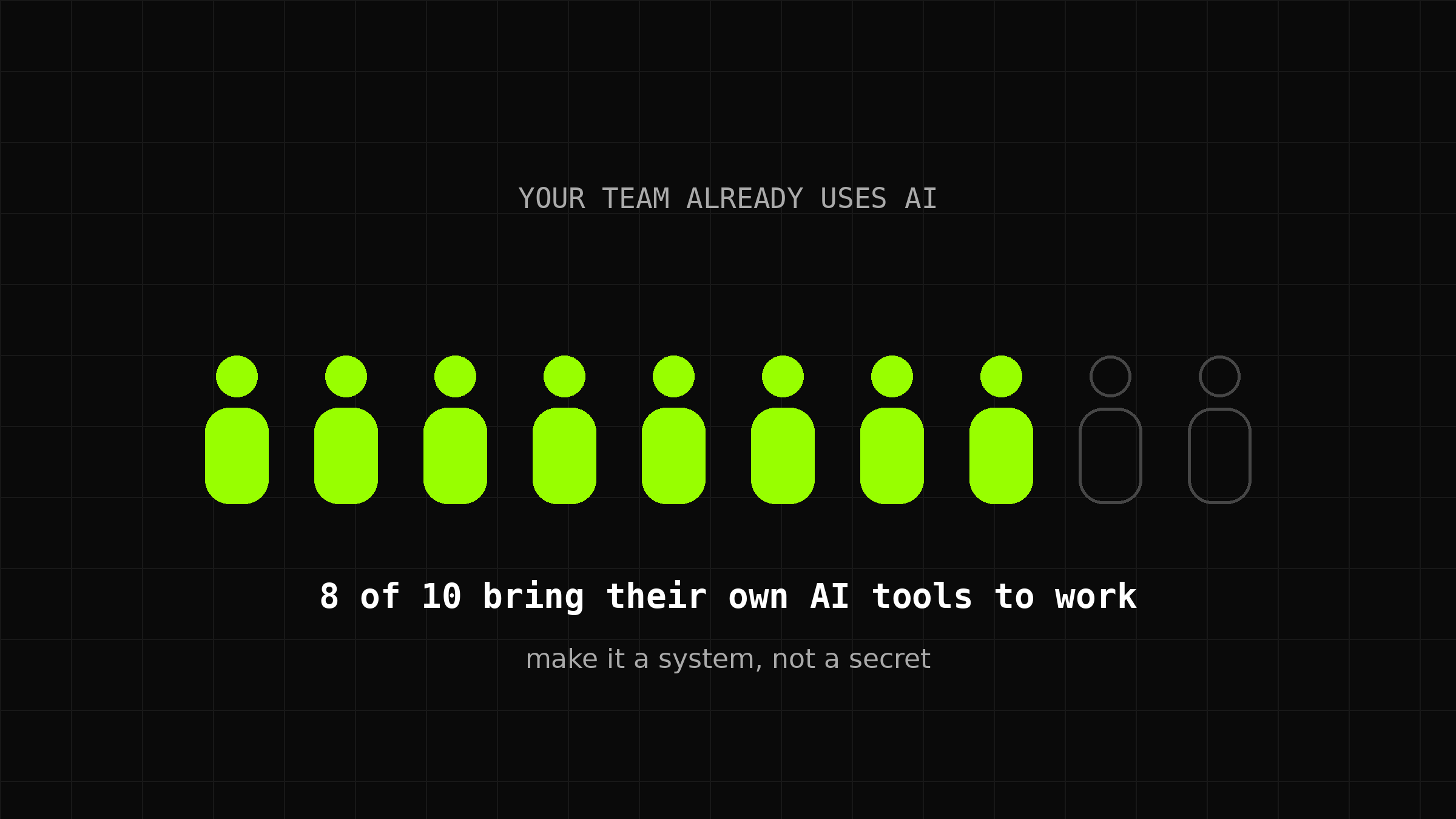
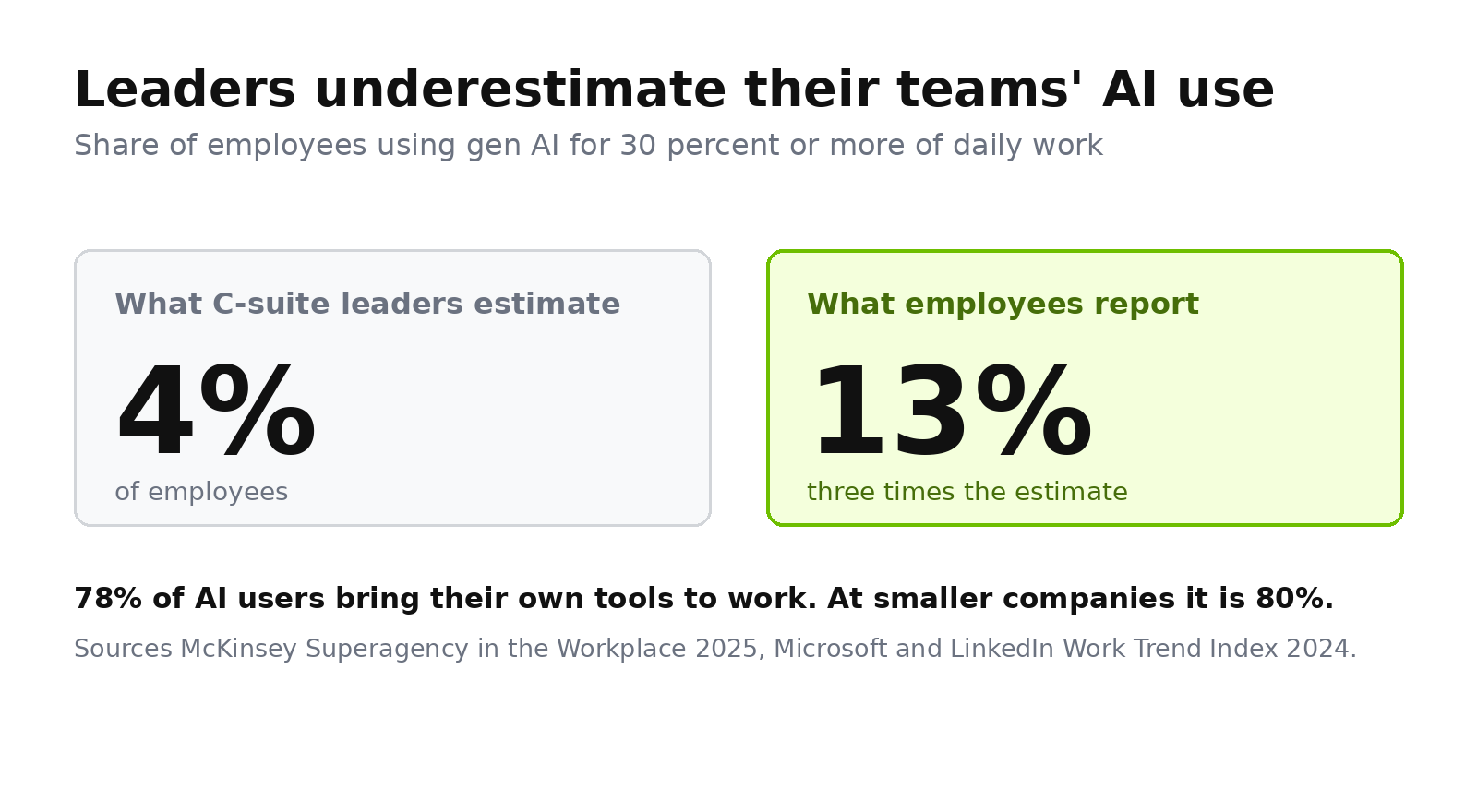
Microsoft and LinkedIn's Work Trend Index surveyed 31,000 workers and found 75 percent of knowledge workers already use generative AI at work. 78 percent of them bring their own tools rather than using anything the company provides, and at small and mid-size companies that share rises to 80 percent. Half are reluctant to admit what they use it for.
Leadership sees very little of this. McKinsey's Superagency report found C-suite leaders estimate that 4 percent of employees use gen AI for a third or more of their daily work. The number employees themselves report is 13 percent. Your team is three times further ahead than you think, and they are doing it on personal accounts you cannot see.
Why your best people hide it
The behavior is rational. There is no policy, so nobody knows what is allowed. The same Microsoft research found 53 percent of people who use AI on important tasks worry it makes them look replaceable.
So the person who figured out how to do a two hour task in twenty minutes keeps it to themselves. The company's most valuable process improvement is a secret.
What shadow AI costs you
Client information flows through personal accounts with no agreement covering it. Output quality varies by person because everyone prompts alone. And nothing compounds. Each employee learns privately, repeats each other's mistakes, and takes the knowledge with them when they leave.
MIT's enterprise research describes a shadow AI economy running underneath official initiatives, often outperforming them. That is the part worth paying attention to.
Why banning it fails
A ban does not stop the behavior. It pushes it further underground, onto phones and home laptops, with less oversight than before. The productivity is real, which is exactly why people will not give it up.
Make it official instead
- Write a short policy people can actually follow, covering what data goes where
- Give the team a company workspace grounded in your own documents and tone, so the sanctioned path is better than the private one
- Train in the open, in a regular cadence where people share what works
- Name an owner who tracks usage and spend and keeps improving the setup
The upside
The hidden 13 percent are your pilot team. They have already proven motivation, on their own time, with their own money. Our fastest rollouts happen in exactly the companies where shadow use was highest, because the appetite was there all along. The work is not convincing people to use AI. It is giving the people already using it a system worth using.