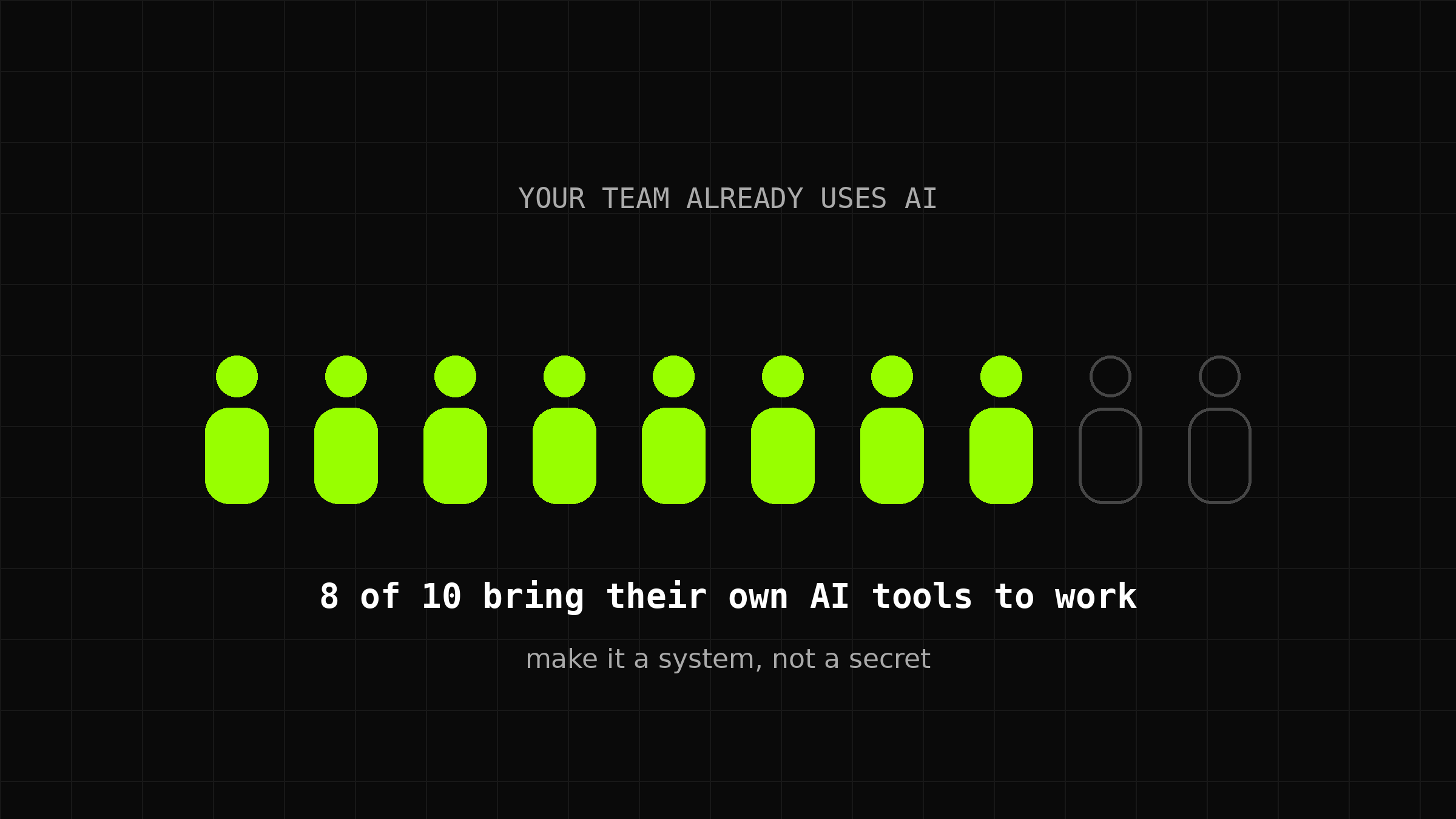


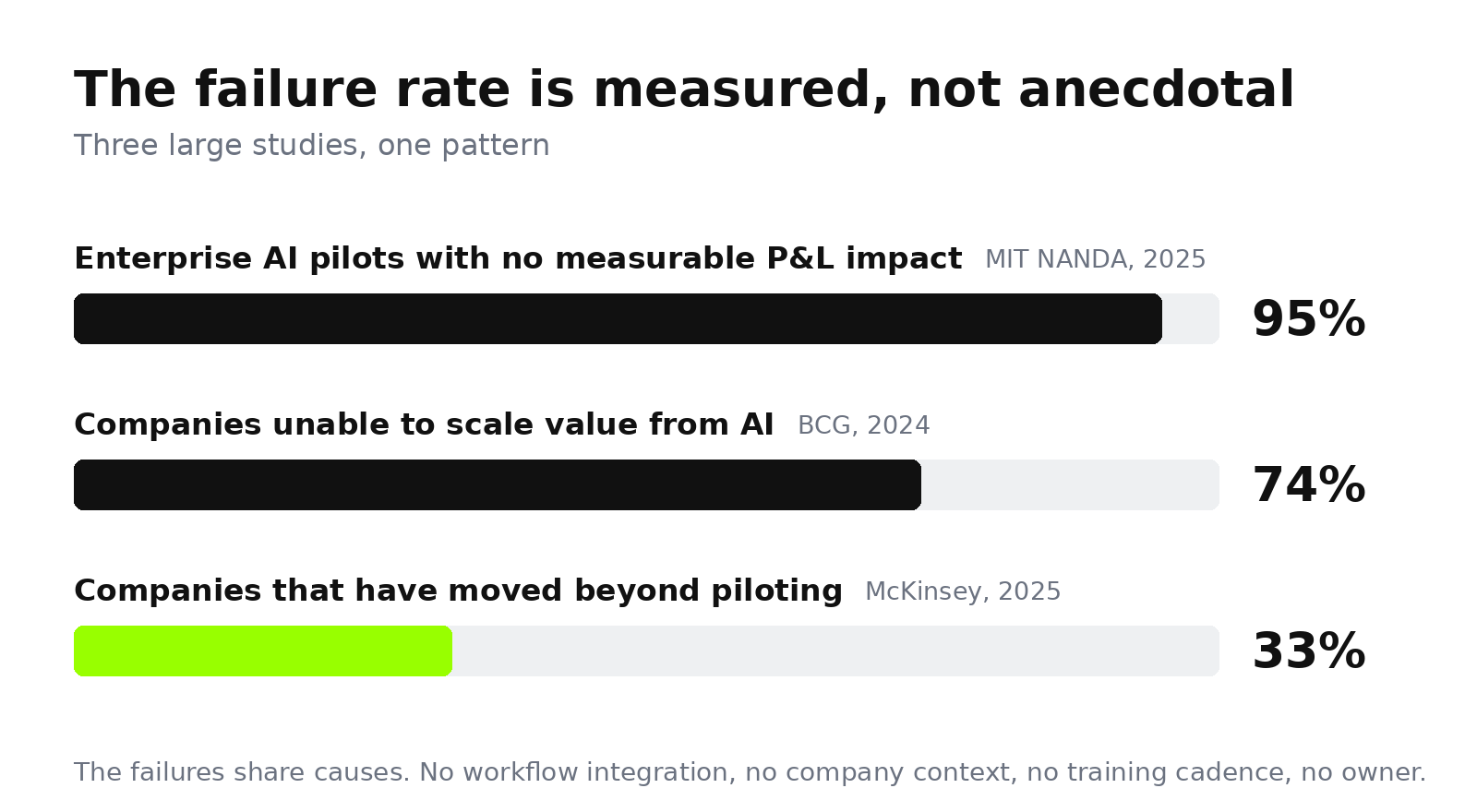
The numbers on this are no longer soft. MIT's NANDA initiative examined 300 enterprise AI deployments in 2025 and found that 95 percent of pilots delivered no measurable impact on the P&L. BCG's survey of 1,000 executives put the share of companies unable to scale value from AI at 74 percent. McKinsey's 2025 global survey found adoption near 88 percent, with only about a third of companies past the pilot stage.
Adoption is everywhere. Results are rare. The gap has specific causes, and we see the same four in almost every stalled initiative we are called into.
The AI never reached the workflow
In most failed rollouts, using AI meant extra steps instead of fewer. Copy the text out, paste it into a chatbot, fix the result, paste it back. People will not maintain a detour, no matter how impressive the demo was.
MIT's researchers named the underlying problem a learning gap. The tools did not adapt to how the organization actually works, so the organization quietly stopped using them.
The AI had no company context
A blank chatbot writes proposals that sound like every other company, with the wrong pricing and the wrong tone. After a few rounds of fixing generic drafts, people reasonably conclude the technology is overhyped.
The model was never the problem. The missing ingredient was company knowledge behind every output, so drafts start correct instead of generic.
Training stopped at the demo
A single workshop creates a spike of interest that decays within days. Only the naturally curious keep going, and they were using AI anyway.
BCG's data makes the point bluntly. Winning companies put 70 percent of AI effort into people and processes. A demo is not 70 percent of anything.
Nobody owned it
AI was everyone's side project and nobody's job. No one tracked which tools earned their subscription, and when usage dropped, nothing happened. Initiatives without owners do not fail loudly. They just stop.
What the successful minority does
- AI built into the tools people already use, so it is the shortest path to done
- Company knowledge grounding every output, from pricing to tone
- A fixed training cadence on live work, weekly or every other week
- A named owner who tracks usage and spend and ships an improvement every month
None of this is technically hard. It is operational discipline, which is exactly what gets skipped when AI is treated as a software purchase instead of a change in how the company works.
The test that matters
Count behavior, not sentiment. Six months in, does real client work move through AI every week without anyone pushing? Do new hires get onboarded into the setup in their first week? Does the recurring admin run in the background?
If yes, output grows without headcount following it. If no, you do not have an AI capability. You have licenses.