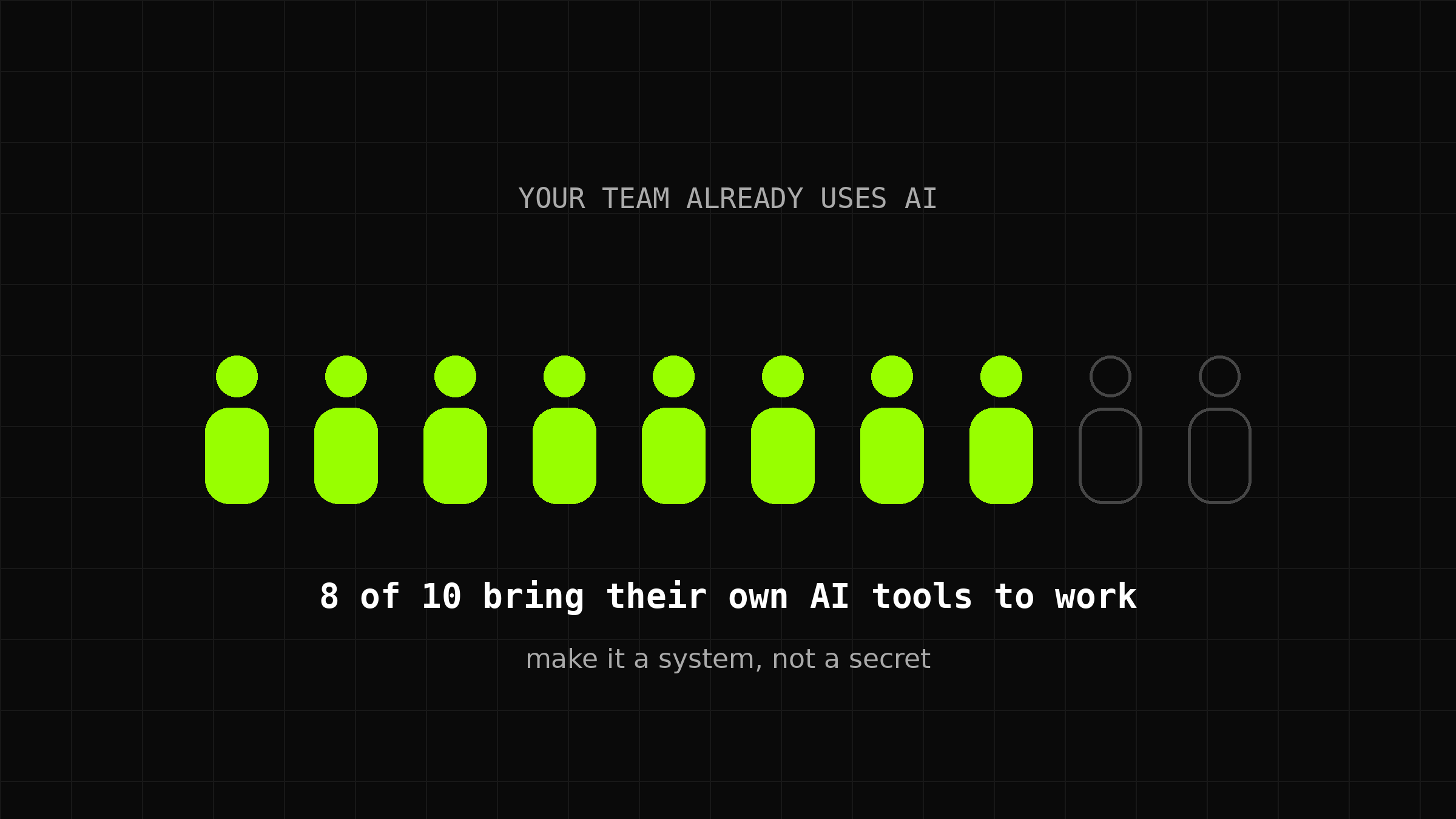


Most companies have already started. McKinsey's 2025 State of AI survey puts regular AI use at 88 percent of organizations, up from 78 percent a year earlier. The same survey shows where it stalls. Roughly two thirds have not moved past piloting, and only a minority can tie AI use to profit.
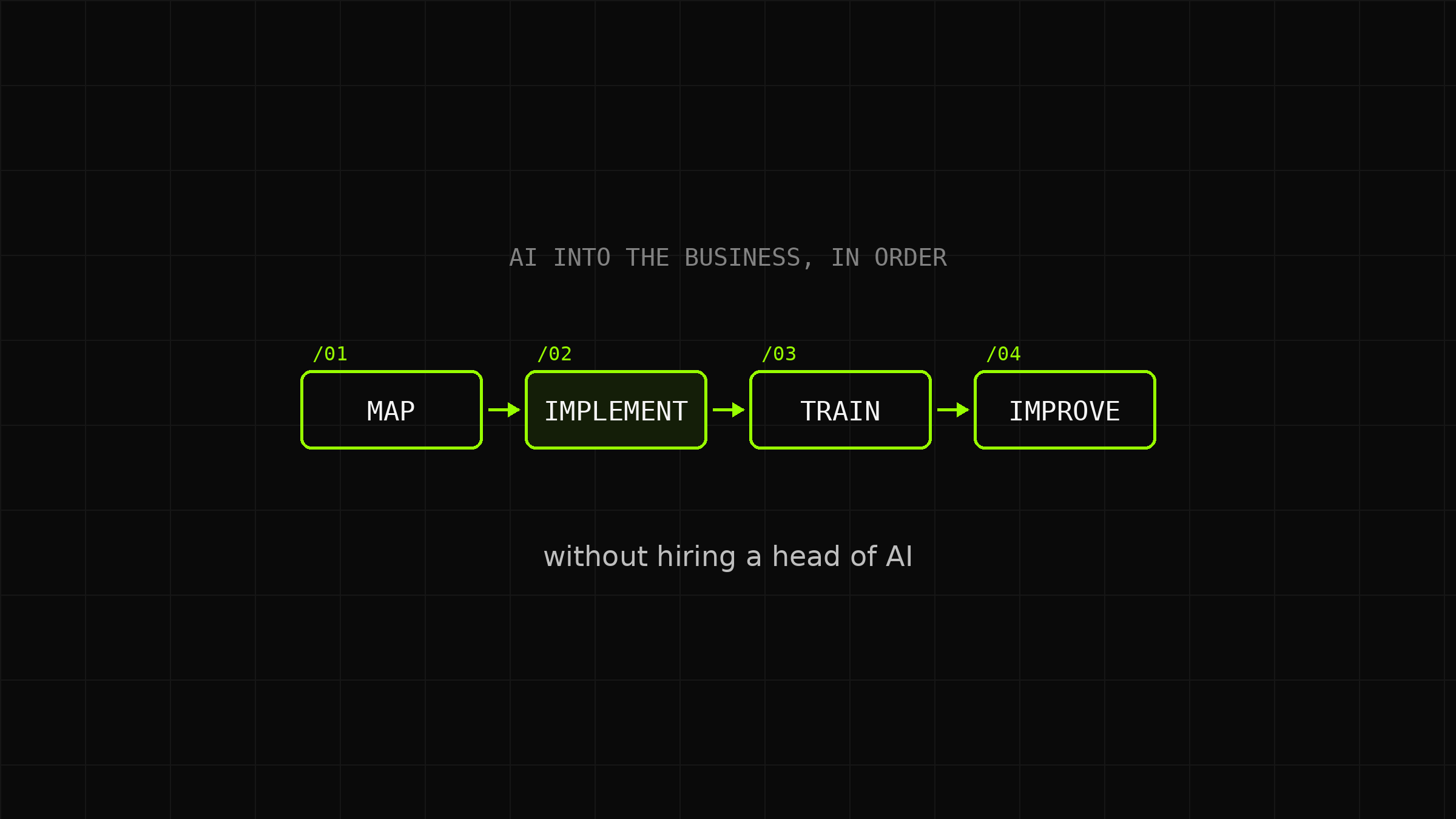
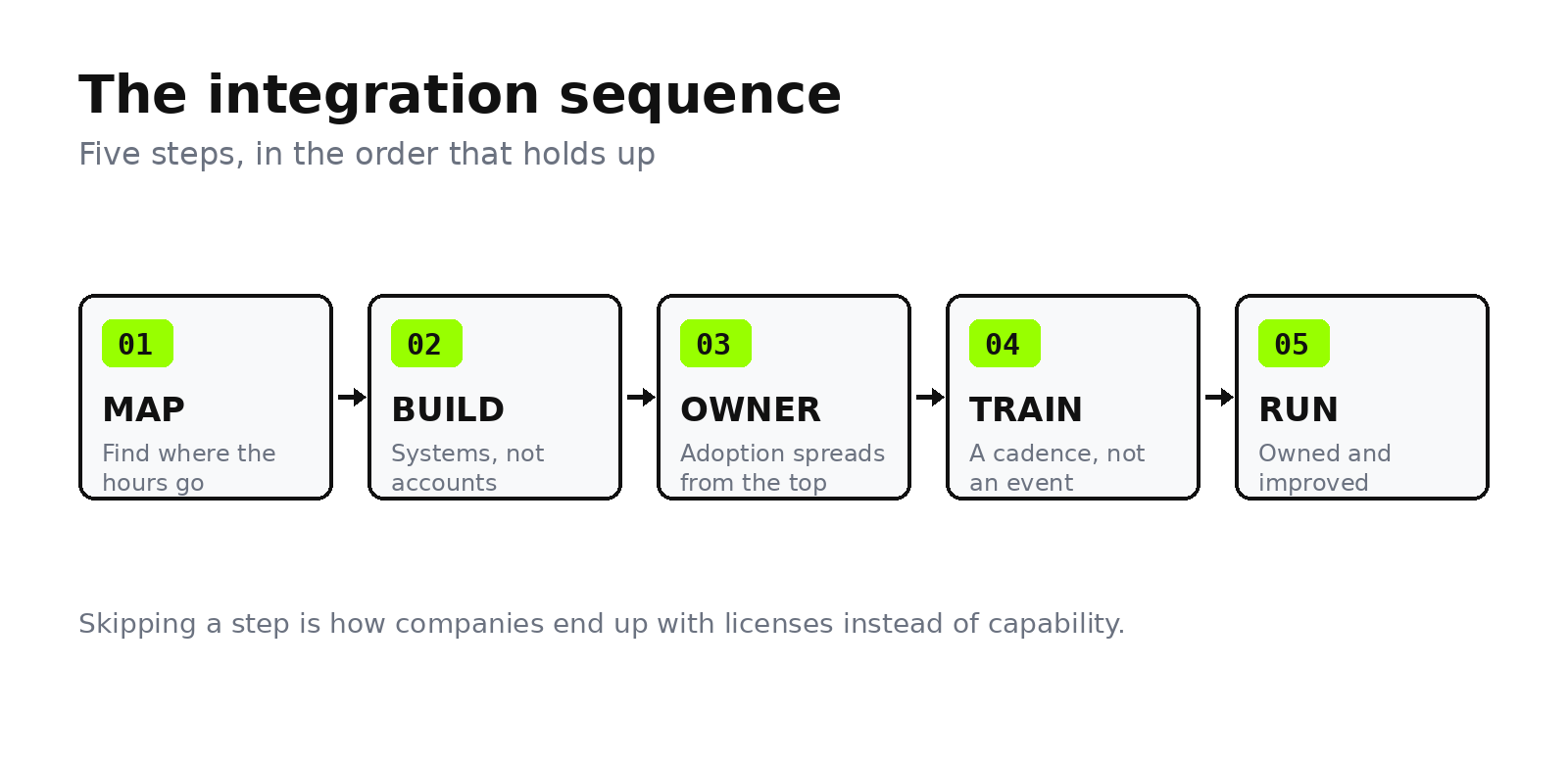
The instinctive fix is a dedicated hire. For a 10 to 50 person company that math is hard to defend. Glassdoor puts the average Head of AI salary around $350,000, and the search itself takes months. We build AI operations inside owner-led companies every week without that hire. What replaces it is not a tool decision. It is a sequence, run in order.
Map the work before buying anything
Every integration that held started with a map of how work actually moves through the company. Where the hours go, which tasks repeat in the same shape, where information gets retyped between systems.
The map decides where AI pays off first, and it usually points somewhere unglamorous. Quoting, reporting, inbox handling. That is where the early wins live, and early wins buy the team's patience for everything that follows.
Build systems, not accounts
A ChatGPT license is an account. A system is AI connected to your documents, your pricing logic, your tone, and the tools your team already works in.
That distinction carries the whole outcome. MIT's 2025 review of 300 enterprise AI deployments found 95 percent of pilots produced no measurable return, and traced the failures to integration rather than model quality. The same research found tools built with external partners succeeded about twice as often as internal builds.
Start with the owner
Adoption spreads from the top. When the CEO runs their own week on AI, the team follows without being pushed, and the person paying for the change can judge its value firsthand.
Rolling AI out to the whole company before anyone senior uses it daily is the most reliable way we know to stall an initiative.
Train in a cadence, not an event
A single workshop produces two weeks of enthusiasm and then silence. What holds is a rhythm of short sessions where people bring the work already on their desk and leave with it done in a better way.
BCG's research on where AI creates value found the companies that succeed put 70 percent of their effort into people and processes, 20 percent into technology and data, and 10 percent into the algorithms themselves. Most companies invert that ratio and wonder why nothing changes.
Run it like an operation
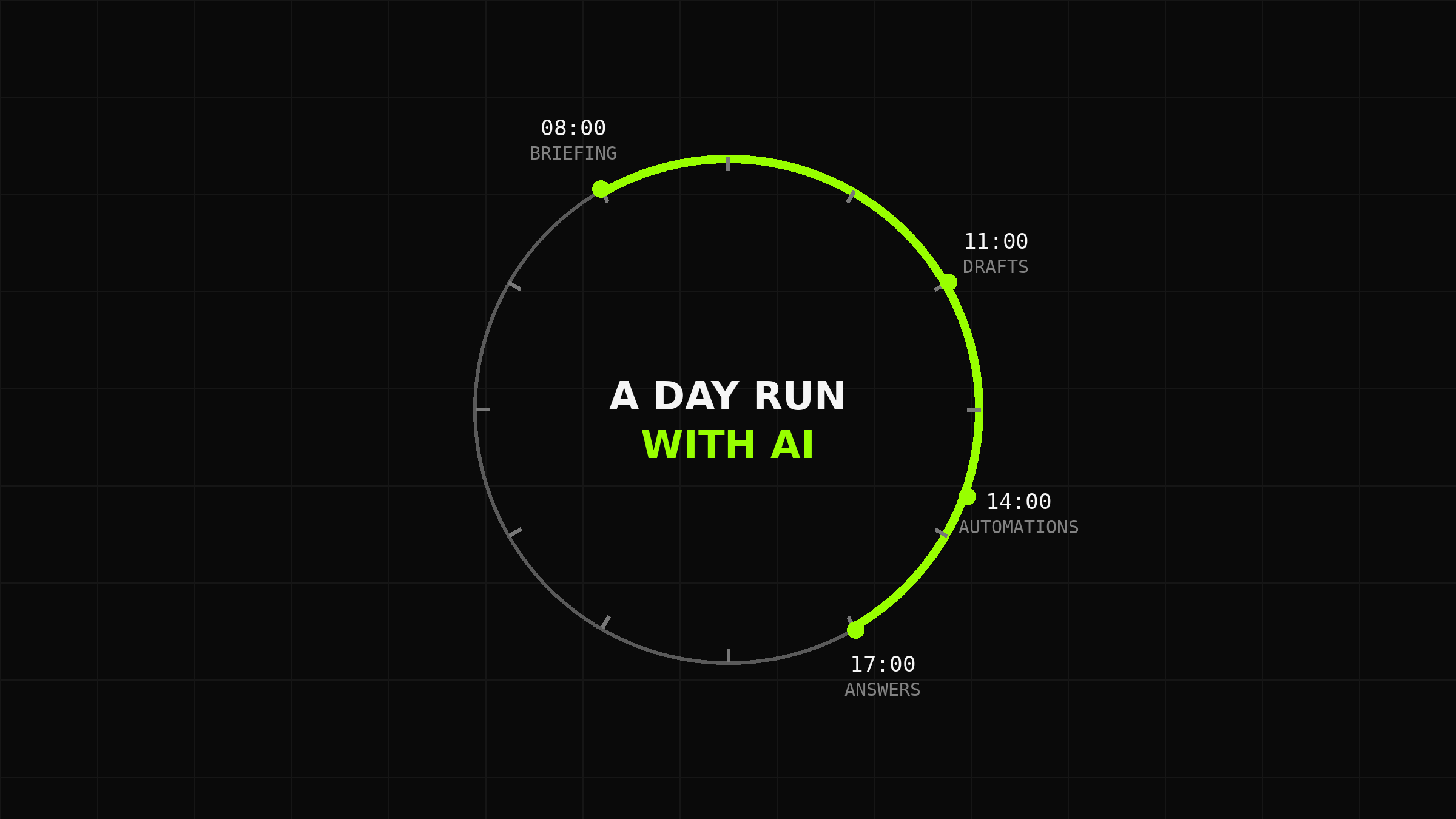
The AI market moves monthly. Tools improve, prices shift, and a setup that was sharp in January is dated by summer. Someone has to own the stack, watch the spend, ship the next automation, and onboard new hires into the system.
This is why we work on retainer rather than in projects. A one-off build decays. An owned operation compounds.
The bottom line
You do not need a head of AI on payroll. You need this sequence run properly by someone accountable for the outcome. That can be a capable internal operator with protected time, or a partner like us acting as your AI department. The companies pulling ahead are not the ones with the biggest tool budgets. They are the ones that treated AI as an owned operation from the start.