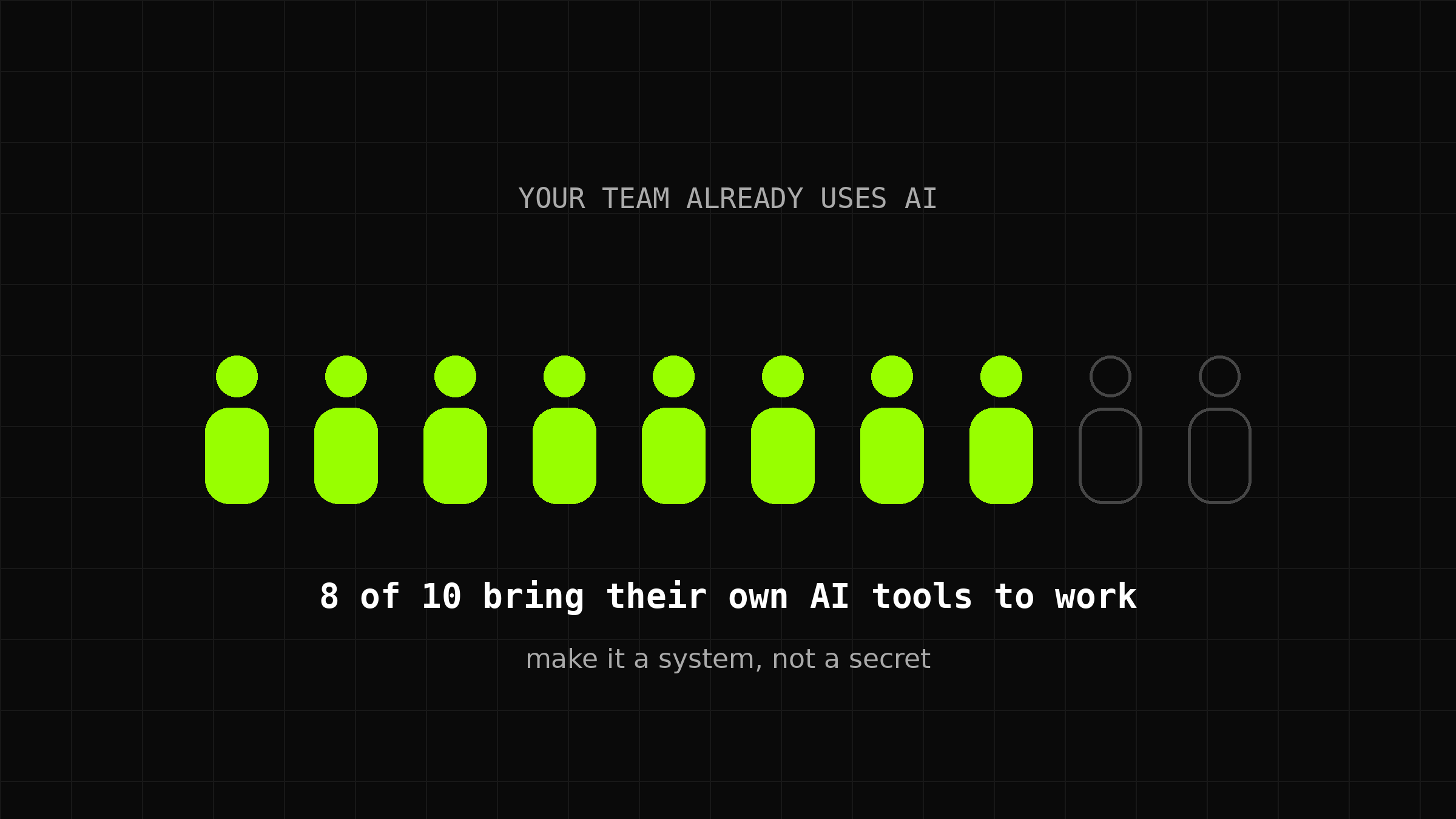


AI-native gets used loosely, so here is the definition we work to. A company is AI-native when AI is built into how the team already works, grounded in the company's own knowledge, and nobody thinks of it as AI anymore. It is simply how work gets done.
The distinction between casual and daily use is not cosmetic. Research from the Federal Reserve Bank of St. Louis found the average AI user saves about 5.4 percent of work hours, roughly two hours a week. Among people who use AI every day, a third save four or more hours a week. The gains concentrate where use is habitual. That habit is what we build. Here is what an ordinary day looks like once it holds.
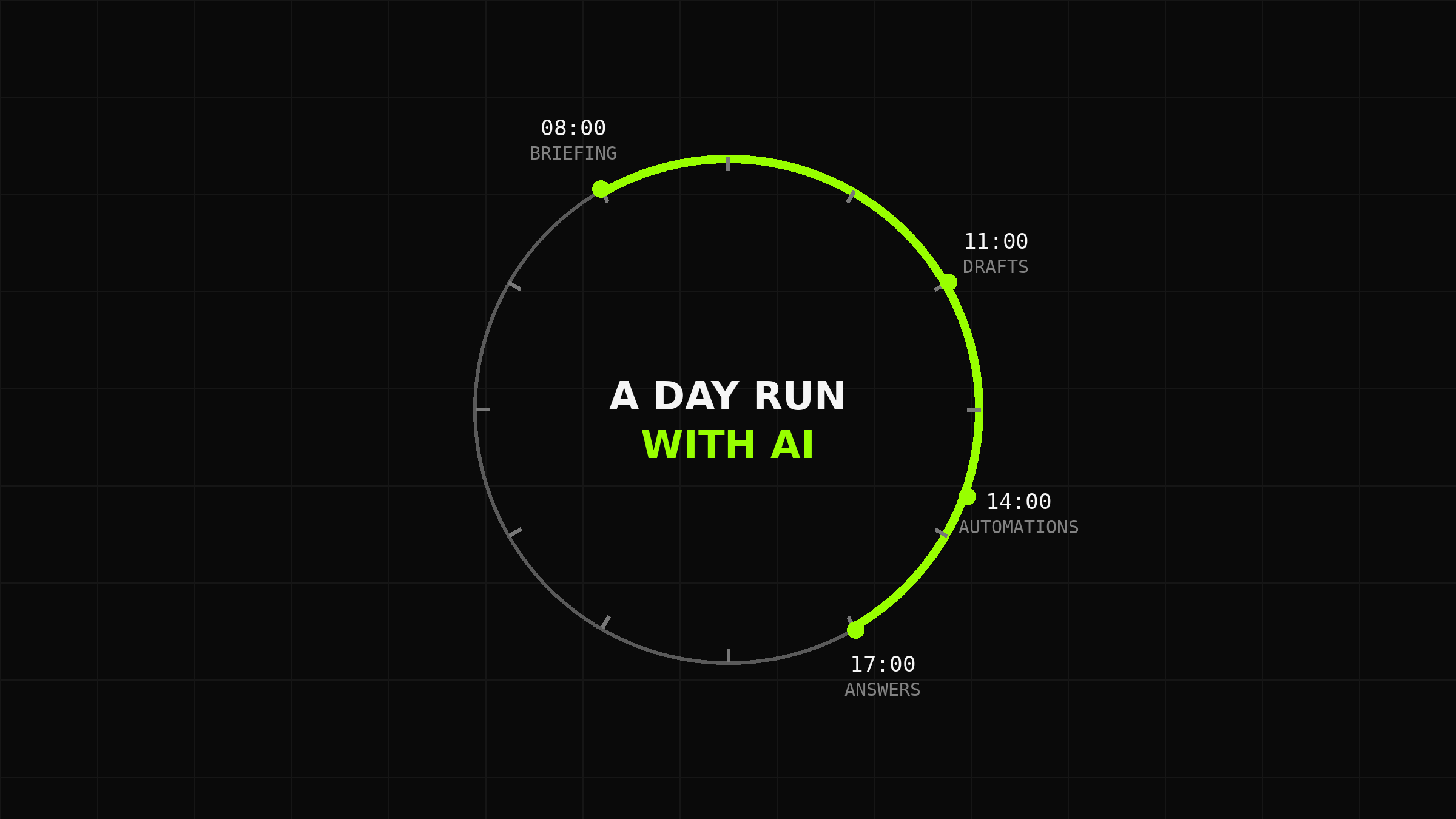
The briefing replaces the inbox hour
People start the morning with a short digest instead of sixty unread emails. Overnight messages are summarized, the day's meetings are prepped with context from the CRM and past notes, and the two things that need a decision sit at the top.
Ten minutes replaces the first hour of the day, every day.
Documents start at eighty percent
Proposals, quotes, job ads, and reports are drafted by AI that knows the company's past work, pricing logic, and tone. People review, correct, and finish.
Nobody starts from a blank page, and quality becomes more consistent because every draft starts from the same knowledge base rather than from whoever happens to write it.
The admin layer runs itself
Data moves between systems without being retyped. Follow-ups go out on schedule, meeting notes file themselves against the right customer, and invoices get chased without anyone dreading the task.
Every automation keeps a human checkpoint where judgment matters. The repetitive middle is what disappears.
Answers come from company knowledge
Questions that used to interrupt a senior colleague go to an internal assistant that knows the SOPs, the pricing rules, and the project history. What did we quote that client last year? The answer arrives in seconds, with the source document attached.
What changes for new hires
A new hire gets the AI setup on day one and learns how the company works partly by working with it. The knowledge that used to live in the heads of two senior people is available from the first week, and it stays when people leave.
In our client companies this is often the most underrated effect. Ramp-up times drop by half or more, and the quality bar stops depending on who trained you.
Why this is the point
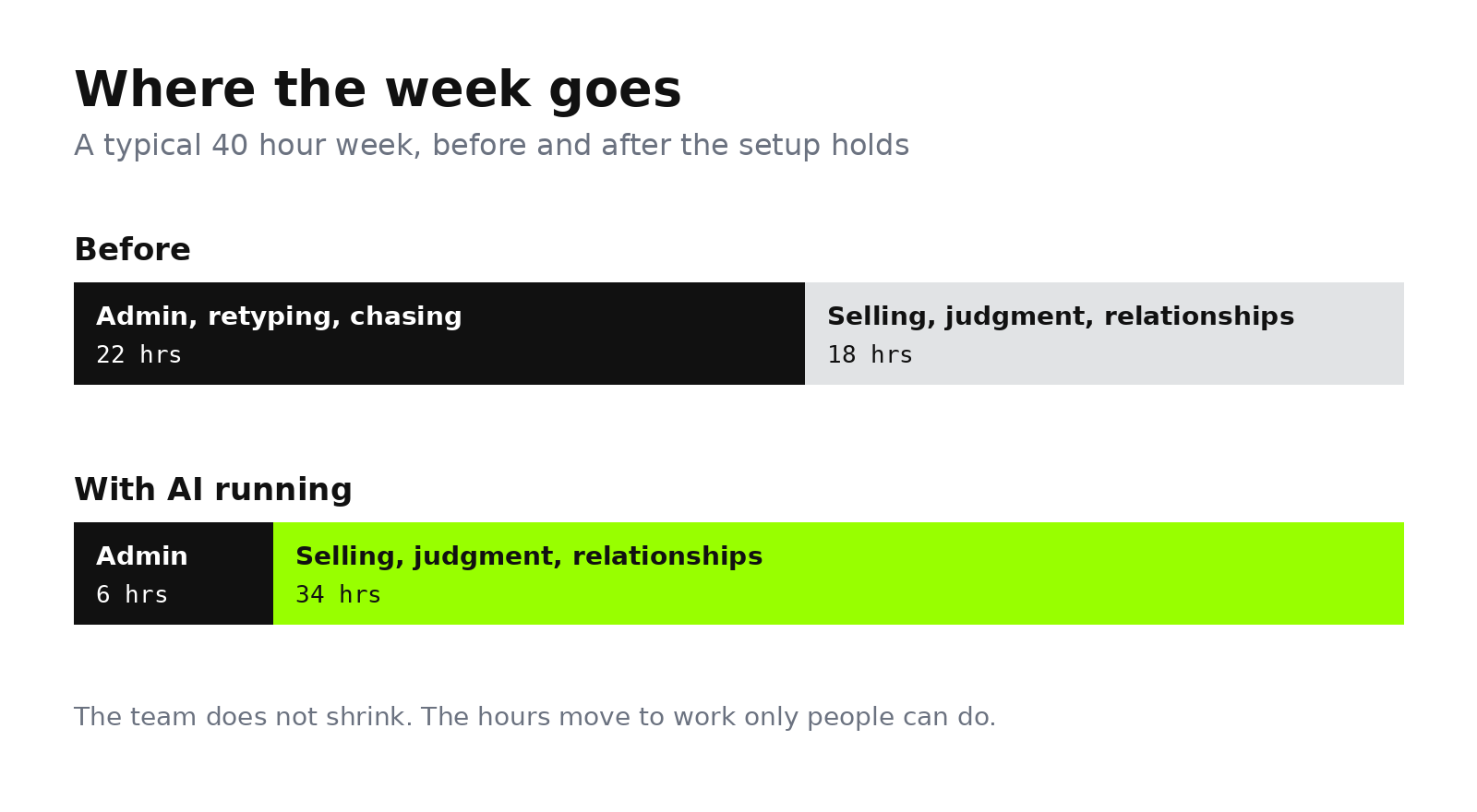
Nothing above removes people. It moves their hours from retyping and chasing to selling, relationships, and judgment calls, which is where revenue actually comes from.
Output grows with the team you already have. That is what AI-native means in practice, and it is the standard worth building to.